


Choosing the right Fence Posts can decide whether a fence stands proudly or leans after one wet season. Soil, rainfall, wind, frost, and gate weight all affect that decision. A post that performs well in dry, sandy ground may fail in heavy clay. That difference matters.
Jeff Beneke, author of The Fence Bible, has emphasized that “the posts are the foundation of any fence.” His practical point remains easy to test. Dig a post hole, pour water into the soil, and watch how quickly it drains. Then consider the fence material, post spacing, and local weather. These small observations often matter more than an attractive product label.
This guide examines the 10 best Fence Posts for different fencing projects. It compares treated wood, galvanized steel, vinyl, composite, and other practical options. Each choice has strengths, weaknesses, and maintenance demands. Some posts resist moisture well. Others handle impact or heavy gates better. None is perfect.
That is worth remembering.
I have seen sturdy panels fail because their posts were too short. I have also seen inexpensive posts perform reliably when installed carefully. A deep hole, proper alignment, gravel drainage, and suitable concrete can change the result. Still, installation advice is not universal. Regional soil conditions may require a different approach. Check product specifications before buying, and question any recommendation that ignores your property. This guide aims to make that decision clearer, more realistic, and easier to defend.
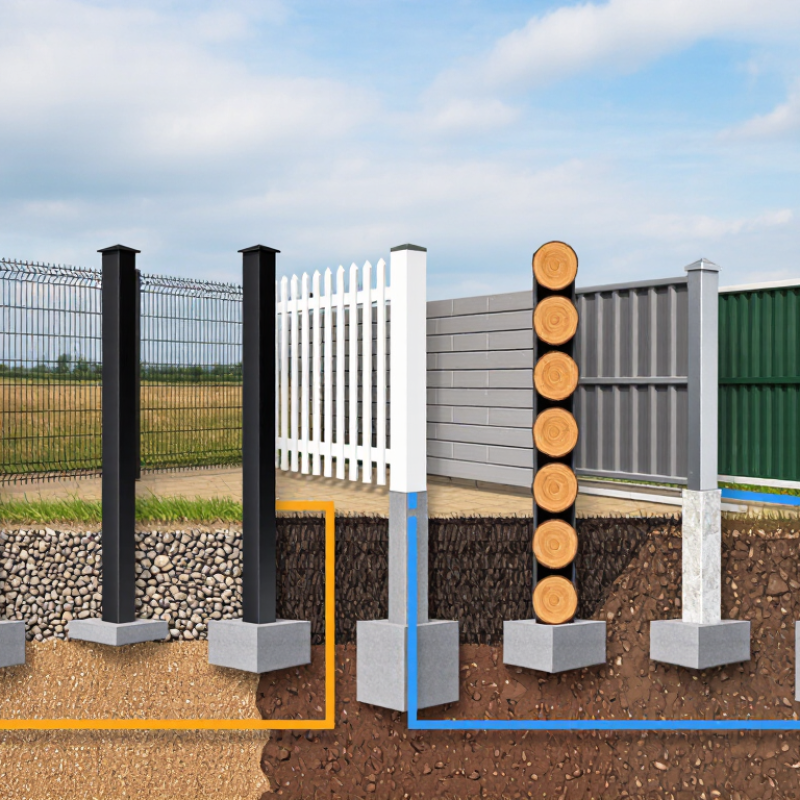
Choosing the best fence post starts with the site, not the price tag. Measure soil moisture, frost depth, wind exposure, and fence height. A lightweight garden fence needs different support than a tall privacy fence.
For timber posts, check the treatment category before installation. The American Wood Protection Association classifies ground-contact products under UC4 categories, including UC4A, UC4B, and UC4C. Higher exposure requires stronger protection. The USDA Forest Products Laboratory reports that wood reaches fiber saturation at about 30% moisture content. Poor drainage can keep posts vulnerable for years. Gravel around the base helps, but it cannot fix unsuitable wood.
Steel posts suit windy areas and long fence runs. Their strength depends on wall thickness, coating quality, and connection design. Concrete posts resist rot, yet they are heavy and difficult to replace. Composite posts can look clean, but local availability and structural testing deserve attention. Ask for load data, treatment documentation, and installation guidance. Do not rely on a glossy product label.
I once selected posts by appearance. That was a mistake. The soil stayed wet, and the gate shifted within one winter. Post spacing also matters; follow the fence system’s tested recommendations rather than guessing. For wind regions, compare the layout with ASCE 7 wind-load provisions or advice from a qualified local professional. Small details matter. A post should match the soil, fence weight, drainage, and expected service life.
10 Best Fence Posts for Your Fencing Project?
Ten Top Fence Post Types Compared by Strength, Cost, and Durability
Post choice changes how a fence feels under wind, moisture, and daily use. Pressure-treated pine is affordable and widely available, but it needs careful ground-contact treatment. Cedar resists decay naturally and costs more. Redwood offers similar durability, though supply and price vary. Oak brings strong impact resistance, yet it can split without proper drilling. Black locust is extremely durable, but harder to source. Composite posts resist rot and insects, with medium-to-high costs. Vinyl posts need little maintenance, but they can crack in severe cold. Galvanized steel provides high strength and slim profiles. Aluminum is lighter and corrosion-resistant, but less rigid. Concrete posts deliver excellent stiffness, although installation is labor-intensive.
The USDA Forest Products Laboratory’s Wood Handbook identifies moisture control, end-grain sealing, and soil exposure as major factors in wood decay. Its guidance supports using ground-contact-rated timber, not ordinary boards. For steel, service-life tables from the American Galvanizers Association indicate that thicker zinc coatings generally provide longer protection, often lasting decades in moderate environments. Costs remain regional. Concrete and steel usually require more labor, while timber reduces initial expense. My practical mistake was comparing purchase prices only; digging, transport, bracing, and replacement risk changed the calculation.
Tips: Match the post to the soil first. In wet ground, use concrete, galvanized steel, or properly treated timber. Keep wood above standing water. Leave room for drainage. Check local wind exposure before choosing a slender post. A cheaper post is not always cheaper later.
A comparison of common fence post materials by typical material cost, expected service life, and relative structural strength.
The chart uses representative midpoints for an 8-foot post: typical material-only cost in U.S. dollars, expected service life in years under normal outdoor conditions, and a relative strength rating from 1 to 10. Actual performance depends on soil, moisture, installation quality, post dimensions, treatment, and local prices.
The best fence post depends on soil, climate, fence style, and post spacing. In firm, well-drained soil, treated wood posts can provide reliable support for privacy fencing. Steel posts suit windy areas and lighter panels. Concrete posts resist rot, but installation is harder and less forgiving. Always inspect local soil conditions before choosing a material.
Climate changes the decision. In freezing regions, posts should extend below the local frost line to reduce heaving. Wet soil requires careful drainage, especially around wooden posts. Sandy soil may need wider holes or added concrete for stability. Heavy gates and solid fences create greater wind loads, so they usually require stronger corner posts and closer spacing. A common spacing range is six to eight feet, but large panels may need less.
Tips: Measure the fence line twice. Check for buried utilities before digging. Keep posts aligned with a string line, and confirm each one is plumb. I once trusted a dry surface and ignored the soft soil underneath. That fence leaned after one wet season. Experience taught me to test several digging points, not just one. Spacing also deserves flexibility; perfectly equal gaps can fail when terrain changes. A small adjustment may create a straighter, stronger fence.
A durable fence begins below ground, not at the gate. The best posts depend on soil, wind, moisture, and fence weight. Pressure-treated wood suits many residential projects, while galvanized steel handles moisture and repeated loading better. Composite posts resist rot, but their structural limits require careful checking. The USDA Forest Products Laboratory reports that decay fungi usually need wood moisture above 20 percent. Keep vulnerable wood away from standing water.
Mark each post location with a measuring tape and confirm local setback rules. Dig below the regional frost depth when required. A narrow, deep hole often secures a post better than a wide, shallow hole. Place two or three inches of drainage gravel at the base. Set the post, check it with a level on two sides, then brace it with scrap lumber. Small errors become obvious later.
Mix concrete consistently. Do not bury untreated wood directly in wet soil. The American Wood Protection Association identifies ground-contact treatment as a key factor for exterior wood durability. Slope the concrete away from the post, forming a small crown that sheds rain. Allow the footing to cure before attaching panels. I sometimes rush this stage, and the fence reminds me later. Recheck alignment after the first panel. Wind pressure can expose weak spacing quickly, especially on solid privacy fences. The International Residential Code also emphasizes frost protection and structural stability, but local soil conditions still deserve greater attention than a generic diagram.
A practical comparison of common fence-post options, sizing guidelines, installation requirements, and long-term performance.
| Rank | Fence Post Type | Typical Available Sizes | Best Application | Typical Service Life | Recommended Post Spacing | Typical Burial Depth | Installation Method | Main Advantages | Important Limitations |
|---|---|---|---|---|---|---|---|---|---|
| 1 | Pressure-Treated Wood Post | 4 × 4 in; 5 × 5 in; 6 × 6 in Common lengths: 8–12 ft | Privacy fences, picket fences, garden fencing, and general residential projects | Approximately 15–30 years when properly treated, installed, and maintained | 6–8 ft for most residential fences | At least one-third of the post length, usually 24–36 in | Dig a hole, add drainage gravel, set the post in concrete or compacted soil, and check alignment | Widely available, easy to cut, versatile, and compatible with most fence materials | Can rot at the ground line if drainage is poor; requires periodic inspection and sealing |
| 2 | Cedar Post | 4 × 4 in; 5 × 5 in; 6 × 6 in Common lengths: 8–12 ft | Decorative privacy fences, residential boundaries, and projects where appearance matters | Approximately 15–25 years, depending on soil moisture and maintenance | 6–8 ft | 24–36 in, or about one-third of the post length | Use gravel for drainage and concrete where appropriate; keep the post end protected from prolonged standing water | Naturally resistant to decay, lightweight, attractive, and easy to work with | Usually costs more than standard treated pine and can split if fasteners are installed incorrectly |
| 3 | Galvanized Steel Post | 1⅝–2⅜ in outside diameter for many residential systems; heavier sections are also available | Chain-link fences, wood privacy fence frames, high-wind areas, and long-lasting structural supports | Approximately 20–50 years, depending on coating quality, soil, and exposure | 5–10 ft, based on fence height, wind load, and panel weight | 24–36 in for many residential installations | Drive into suitable soil or set in concrete; use corrosion-resistant fittings and caps | High strength, consistent dimensions, resistance to insects, and low maintenance | Difficult to modify on site and may require specialized brackets, tools, or adapters |
| 4 | Aluminum Post | 2 × 2 in; 2½ × 2½ in; 3 × 3 in Common wall thicknesses vary by system | Ornamental fencing, pool fencing, lightweight boundaries, and areas exposed to moisture | Approximately 25–50 years with suitable alloy and protective finish | 6–8 ft for many ornamental panels | 24–36 in, according to local frost and wind conditions | Set in concrete with compatible fasteners; avoid direct contact between incompatible metals | Lightweight, corrosion-resistant, clean-looking, and easy to maintain | Less resistant to impact and heavy lateral loads than steel; not ideal for very heavy privacy panels |
| 5 | Concrete Post | Approximately 4 × 4 in to 6 × 6 in Lengths commonly range from 6–10 ft | Heavy-duty boundary fencing, masonry-style panels, and installations requiring substantial mass | Approximately 40–75 years when properly reinforced and protected from severe freeze-thaw damage | 6–8 ft, depending on panel weight and design | 24–36 in or deeper in unstable soil | Lift into a prepared hole, provide drainage, brace carefully, and backfill with concrete or compacted material | Very durable, fire-resistant, resistant to insects, and highly stable after installation | Heavy to transport, difficult to cut or repair, and vulnerable to cracking from poor drainage or movement |
| 6 | Fiberglass-Composite Post | 2½–4 in square or round profiles Lengths commonly range from 6–10 ft | Wet locations, electric-fence support, lightweight agricultural fencing, and low-maintenance projects | Approximately 20–40 years, depending on ultraviolet exposure and loading | 6–10 ft for lightweight fencing | 18–30 in, adjusted for soil and fence height | Drive or set in concrete; drill with care and use fasteners designed for composite materials | Resistant to rot, rust, insects, and many chemicals; relatively lightweight | Can flex under heavy loads and may cost more than basic wood posts |
| 7 | Vinyl-Coated Steel Post | Commonly 1⅝–2⅜ in outside diameter Coating thickness varies by product | Chain-link fences where a coordinated appearance and added surface protection are desired | Approximately 20–40 years when the coating remains intact | 5–10 ft, determined by fence height and wind exposure | 24–36 in | Drive or concrete-set the post; prevent cuts and scratches in the protective coating | Strong steel core, improved appearance, and additional protection against surface corrosion | Cut edges and deep scratches can become corrosion points if left unprotected |
| 8 | Metal T-Post | Common lengths: 5–8 ft Typical weights: approximately 0.85–1.33 lb per foot | Temporary fencing, livestock fencing, garden fencing, and wire-mesh support | Approximately 10–25 years, depending on coating, soil, and impact | 8–12 ft for many wire-fence layouts | 18–30 in, with deeper setting for high wind or loose soil | Drive directly into the ground with a post driver; attach wire using clips or ties | Fast installation, economical, reusable, and suitable for many lightweight wire fences | Not intended for heavy privacy panels, gates, or high-tension loads without additional structural support |
| 9 | Black Locust Wood Post | Typically 3–6 in diameter Lengths commonly range from 6–12 ft | Rural fencing, agricultural fencing, rustic boundaries, and projects emphasizing natural durability | Approximately 25–50 years in favorable ground-contact conditions | 6–10 ft, depending on fence type and post diameter | 24–36 in, or deeper for high-tension fencing | Use a pointed or drilled end, provide drainage, and compact the surrounding soil thoroughly | Exceptionally durable natural wood, strong, and naturally resistant to decay | Irregular shapes can complicate alignment, drilling, and attachment of standard hardware |
| 10 | Recycled Plastic Post | 3–5 in square or round profiles Lengths commonly range from 6–10 ft | Garden fencing, boardwalk-adjacent areas, landscaping barriers, and low-impact boundary fences | Approximately 20–40 years, depending on ultraviolet exposure and structural loading | 6–8 ft for lightweight fencing | 18–30 in; use deeper installation for loose or wet soil | Drive or set in concrete according to the post design; use compatible screws and brackets | Resistant to rot, insects, and moisture; does not require paint or chemical wood treatment | May bend in heat or under heavy loads and can require closer spacing than wood or steel |
Choosing among the 10 best fence posts means considering maintenance, not appearance alone. Soil moisture, wind, frost, and fence weight affect long-term performance. Pressure-treated wood can look attractive, but it needs regular inspection for rot and splitting. Metal posts resist many pests, yet surface corrosion can spread around scratches. Concrete posts are strong, although poor drainage may cause cracking during freeze-thaw cycles.
I have learned that small installation mistakes become expensive repairs. A post set too shallow may lean after one storm. A post surrounded by trapped water can decay below ground, where damage stays hidden. Check each post twice yearly, especially after heavy rain or strong winds. Replace loose fasteners, tighten gates, and remove soil touching wooden sections. Do not ignore a slight lean. It rarely corrects itself.
Tips: Keep water moving away from posts. Use gravel around buried sections when suitable. Seal exposed wood ends after cutting. Inspect metal for bubbling paint or orange staining. For repairs, support the fence before removing a damaged post. Match the replacement post’s size and strength. I sometimes prefer a practical repair over a full replacement, but only when the surrounding soil remains firm. Photographing damage can also reveal gradual movement that memory misses.
USA / Americas
1507 Capital Ave, Suite 102
Plano, TX 75074
+1 (214) 838-7010
8:00am – 5:00pm (GMT-6)
Australia / Asia Pacific
503 Cross Keys Rd,
Cavan SA 5094
+61 8 7200 3909
9:00am – 5:00pm (ACDST)
© 2025 Green Frog Systems. | Privacy Policy | Terms & Conditions


