How to Choose the Best Solar Light for Home Use?
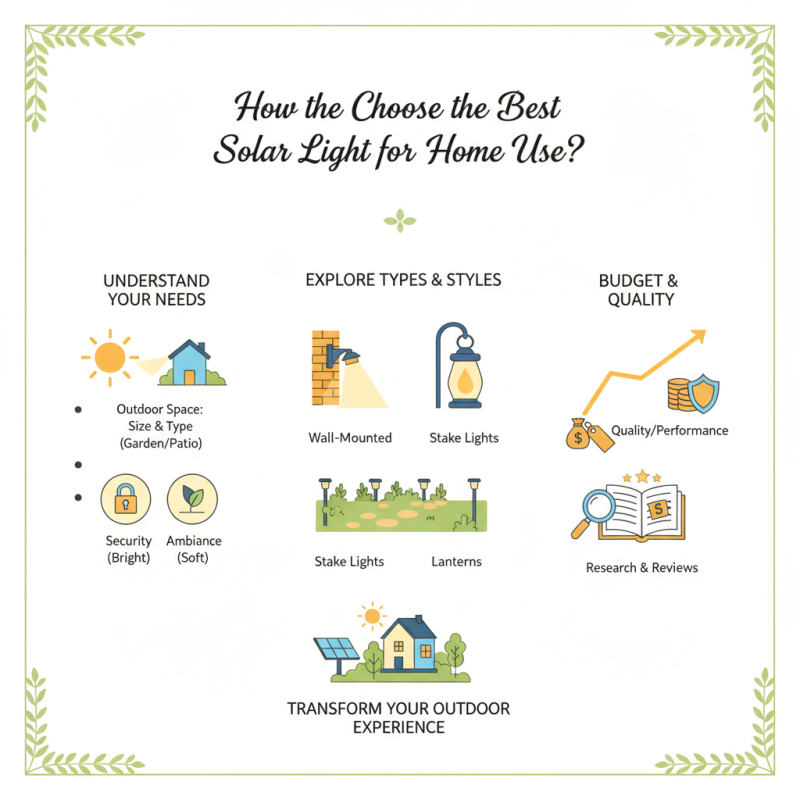
Choosing the right solar light for home use can be a daunting task. With so many options available, it is important to understand your needs. Each outdoor space is unique and may require different types of solar lights.
Consider the size of your garden or patio. Do you need bright lights for security or softer ones for ambiance? Solar lights for home use come in various styles, including wall-mounted, stake lights, and lanterns. A well-lit space can enhance safety and aesthetics.
Reflect on your budget too. While some solar lights may seem expensive, others are quite affordable. They vary in quality and performance. It's crucial to research and read reviews. Investing time can lead to better choices in your home lighting. After all, the right solar light can transform your outdoor experience.
Factors to Consider When Choosing Solar Lights for Home Use
When choosing solar lights for your home, several factors demand attention. Start with the brightness. Measured in lumens, brightness can determine how effectively a light illuminates your space. Lower lumen ratings might suffice for pathways, while higher ratings work best for security areas. Also, consider the placement. Lights installed under trees may not charge effectively. Shadows can hinder performance, limiting their usefulness.
Next, assess the battery life and charging time. Batteries store energy captured during the day. If they have short lifespans, your lights may fail during extended nights. Examine weather resistance, too. Solar lights exposed to rain and snow should have robust materials. Sunlight exposure is crucial, but sometimes unexpected cloudiness can affect energy collection.
Lastly, think about design. Solar lights come in various styles, from modern to traditional. Find a look that suits your home. However, aesthetic appeal shouldn't overshadow functionality. The challenge lies in striking a balance. A beautiful fixture might not perform well, and a practical choice might clash with your home's aesthetic. Reflect on these points carefully before making a decision.
Solar Light Types and Their Popularity
Understanding Different Types of Solar Lights for Home Applications
When considering solar lights for home use, understanding different types is crucial. There are path lights, string lights, wall lights, and spotlights. Each serves unique functions.
Path lights help illuminate walkways. They enhance safety.
String lights create ambiance for gatherings. Wall lights provide security.
Spotlights highlight trees or architectural features.
According to a recent industry report, the market for solar outdoor lighting is expected to grow by 20% annually until 2026. This growth reflects rising interest in energy-efficient solutions.
However, many consumers face challenges. Each type of light has distinct installation processes and performance levels. For instance, path lights often require adequate sunlight. Homes in shady areas may not benefit as much.
A common concern is durability. Many solar lights falter in extreme weather. They need regular maintenance and occasional replacements. Moreover, brightness can vary. Some lights are too dim for practical use.
Users often find it hard to choose models that maintain consistent performance over time. Understanding these aspects can lead to better purchasing decisions.
An informed choice can mitigate frustrations later.
Evaluating Brightness and Lumens for Effective Outdoor Lighting
Choosing the right solar light for home use largely hinges on understanding brightness and lumens. Brightness is crucial for outdoor spaces, ensuring safety and functionality. When evaluating solar lights, you should pay attention to lumens. Higher lumen ratings translate to brighter lights. For an average walkway, about 100 lumens is adequate. If you want to illuminate a larger area, consider fixtures emitting over 300 lumens.
Tips: Consider the area you want to light. Different spaces require varying brightness levels. Low-lit gardens may need softer beams. However, bright lights can cause glare, affecting comfort. Think about your preferences and needs.
Remember, it's essential to balance brightness with energy efficiency. Not all lights with high lumens are energy-efficient. Some options consume more power. It’s wise to check reviews and specifications. A product may seem great, but illumination could fall short. You want reliability over time. Evaluate how the light performs after being exposed to weather. Durability can impact your choice.
How to Choose the Best Solar Light for Home Use?
| Type of Solar Light |
Brightness (Lumens) |
Battery Capacity (mAh) |
Charging Time (Hours) |
Runtime (Hours) |
| Pathway Light |
50 - 150 |
1200 |
6 |
8 |
| Wall Light |
200 - 300 |
2000 |
8 |
10 |
| Flood Light |
300 - 800 |
4000 |
8 |
12 |
| String Lights |
30 - 100 |
600 |
4 |
6 |
| Spotlight |
100 - 400 |
1500 |
6 |
8 |
Assessing Battery Life and Solar Panel Efficiency in Solar Lights
When selecting solar lights for home use, evaluating battery life and solar panel efficiency is essential. The battery determines how long the lights will stay on after dark. Look for batteries with high capacity. A larger capacity means longer illumination hours. However, some batteries may not perform well in cold temperatures. This can limit their effectiveness.
Solar panel efficiency is another critical factor. Efficient panels convert sunlight into energy effectively. A panel with higher efficiency can charge faster, even on cloudy days. Some lights may not have the best panels. They might look appealing but fail to perform optimally. It’s crucial to check reviews and ratings.
Installation is also a consideration. The position of solar lights affects their charging ability. Placing them in a shaded area can lead to poor battery performance. Exploring the surrounding environment helps ensure they receive direct sunlight. Look for lights with adjustable solar panels for better results. It’s worth taking these details into account to ensure satisfactory home lighting.
The Importance of Weather Resistance Ratings for Durability
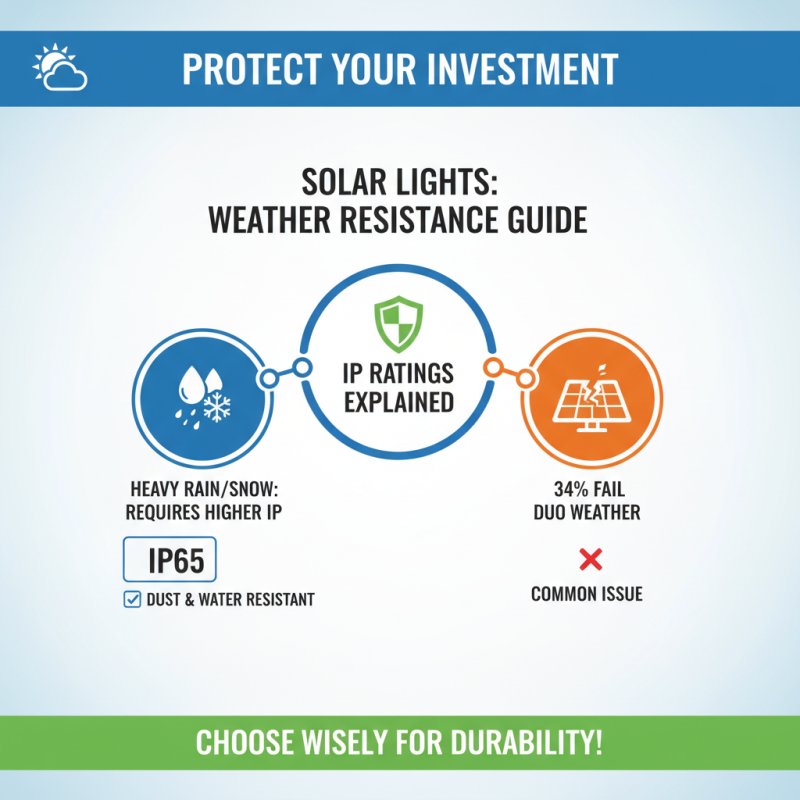
When selecting solar lights for home use, understanding weather resistance ratings is crucial. These ratings indicate how well the lights withstand harsh conditions. In climates with heavy rain or snow, lights need a higher rating. For example, fixtures rated IP65 can resist water and dust effectively. Reports show that 34% of outdoor solar lights fail due to weather damage. This is a significant concern for homeowners.
Tips: Always check IP ratings. A rating of at least IP65 is recommended for outdoor use. Additionally, look for lights with UV protection to prevent fading.
Durability is often overlooked. Many buy solar lights without considering how long they will last outdoors. Poorly rated lights may need replacement within a year. This increases costs and waste. Ideally, seek lights that are built to last through varying temperatures and weather conditions.
Tips: Research materials used in construction. Metal housings tend to last longer than plastic ones. Consider customer reviews to gauge reliability and performance over time.