


Temporary & Portable Solar Lighting

How to Choose Solar Light Wind Chimes in 2026?

Choosing Solar Light Wind Chimes in 2026 means balancing gentle sound, dependable lighting, and a design that suits your outdoor space. A bright product photo cannot tell you how the chimes sound on a breezy evening or whether the solar panel receives enough daylight. Check the panel’s position, the stated charging time, and the expected run time after a full charge. These details help set realistic expectations. They matter.

Think about where the chimes will hang. A shaded porch may need a different panel arrangement from an open garden, and strong gusts can make lightweight tubes knock together noisily. Read the product dimensions and materials, then look for clear information about battery replacement and weather resistance. If those details are missing, ask the seller rather than relying on vague claims. Listen, too, when possible. A short sound clip may reveal whether the tone is soft, bright, or sharper than you prefer.

The right choice is not necessarily the largest or most decorative model. It should match your available sunlight, preferred sound, and willingness to maintain it. Reviews can help, but consider whether they describe use over time or only the unboxing. Even careful research has limits: sunlight changes with seasons, and outdoor conditions vary from one home to another. Use this guide to compare practical features, spot common trade-offs, and choose Solar Light Wind Chimes with a clearer idea of how they may perform in your own space.
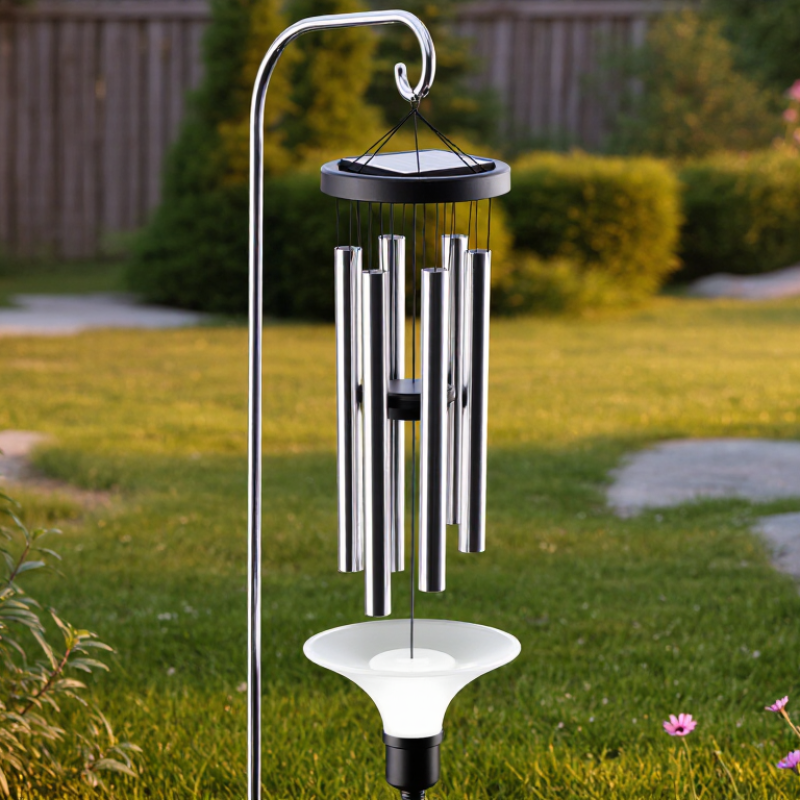
How to Choose Solar Light Wind Chimes in 2026?

Understanding How Solar Light Wind Chimes Work

How to Choose Solar Light Wind Chimes in 2026?
Understanding How Solar Light Wind Chimes Work

A solar light wind chime uses a small photovoltaic panel to turn daylight into electrical energy. That energy charges a rechargeable battery, which powers the LEDs after dark. A light sensor usually detects dusk and switches the lights on automatically. No outlet is needed. The chimes themselves move with the breeze; their sound does not depend on the solar system. It is easy to assume any sunny spot will work, but panel placement matters. A porch roof or nearby tree can block useful light, even when the yard looks bright. Battery capacity, panel size, and the amount of daily sun affect how long the lights stay on. Performance can change with the season, too.

Tips: Place the panel where it receives several hours of direct sunlight, and wipe dust from its surface with a soft, dry cloth. Check whether the panel can be angled toward the sun. If the lights seem dim, allow the battery time to charge before judging performance. Shade may be the culprit. Always follow the product instructions for charging and battery care; designs vary, and that detail is easy to overlook.

How Daylight Affects Solar Light Charging

This chart shows approximate average daylight hours in New York City (40.7°N), rounded to the nearest tenth. Longer days can provide more opportunity for a solar panel to charge its battery, but actual charging also depends on direct sunlight, shade, weather, and panel orientation.

Assessing Your Outdoor Space and Lighting Needs

Before choosing solar light wind chimes, watch the intended spot across a full day. Note direct-sun hours, moving tree shadows, roof overhangs, and nearby walls. A sunny patio at noon may sit in shade by late afternoon, when charging time matters. Small details matter.

The U.S. Department of Energy’s Energy Saver guidance notes that solar lights work best with direct sunlight and may perform poorly in shaded locations. Check the chime’s charging-panel direction, too; a panel facing a fence can lose useful exposure even in an open yard.

For a broader estimate, NREL’s National Solar Radiation Database provides solar-resource data at roughly 4-kilometer spatial and 30-minute temporal resolution for relevant U.S. datasets. Use it to compare regional sunlight patterns, not to predict one corner of your garden: a nearby tree or porch can change conditions substantially.

Then consider what the light must do. A soft glow beside a seating area needs less brightness than a path marker, while bedroom windows may call for dimmer, downward-directed light. I’d measure the actual location before buying; I have sometimes overestimated “sunny” spots. Cloudy weeks, winter daylight, and seasonal foliage can all reduce charging, so check the maker’s stated runtime and charging requirements against your own observations.

Comparing Solar Panels, Batteries, Materials, and Sound

In 2026, compare the solar panel, battery, frame, and chimes as one outdoor system. A panel facing a bright, unobstructed patch can recharge more reliably than one tucked beneath a porch roof. NREL’s review of photovoltaic studies reported a median module degradation rate near 0.5% per year (Jordan and Kurtz, Progress in Photovoltaics, 2013). That figure describes conventional PV modules, not tiny decorative panels, so treat it as context—not a lifespan guarantee.

Battery type affects how consistently the chime runs after cloudy days. Check whether the battery is replaceable, and look for clear capacity and charging information; vague specifications make comparisons difficult. For the frame and hanging parts, corrosion-resistant metal and UV-stable components may better handle rain and sun. Still, material labels alone cannot predict years of outdoor wear. Sound is personal. Shorter tubes often make brighter, higher notes, while longer tubes tend to sound lower; listen outdoors if possible, where wind and nearby walls change what you hear.

Tips: Place the panel where it receives several hours of direct daylight, then test the chime at dusk. Listen before buying. A gentle tone in a shop may sound sharp beside a bedroom window.

How to Choose Solar Light Wind Chimes in 2026? — Comparing Solar Panels, Batteries, Materials, and Sound
Feature Option or specification What to expect Best for / what to check
Solar panel Monocrystalline silicon Typically offers higher efficiency per panel area than amorphous silicon, making it a practical choice when the panel is small. Choose when the chime will receive limited direct sun or has a compact panel. Panel placement and sunlight exposure still matter.
Solar panel Polycrystalline silicon A silicon-panel option that can provide useful charging performance; output depends on panel size, design, and light conditions. Compare the panel’s stated output and dimensions rather than relying on the panel type alone.
Solar panel Amorphous silicon Thin-film panels can be made in flexible or lightweight forms, but generally need more area than crystalline silicon panels for similar output. Consider for designs where flexibility or low weight is important. Check charging performance in the intended location.
Battery Rechargeable NiMH Commonly used in small solar lights. A standard NiMH cell has a nominal voltage of 1.2 V; capacity and runtime vary by cell and light design. Check whether the battery is replaceable and follow the product’s specified battery type and capacity.
Battery Rechargeable lithium-ion Often provides a higher energy capacity for its weight than NiMH, but voltage, charging circuitry, and cell format are product-specific. Confirm that replacement cells, if needed, match the manufacturer’s specified chemistry, voltage, and size.
Charging and runtime Daily sunlight and stated operating time Shade, season, panel angle, weather, battery condition, and light settings all affect charging and nighttime runtime. Look for the maker’s charging and runtime guidance. Place the panel in a sunny spot, while keeping the chime itself where it can move freely.
Chime material Aluminum tubes Lightweight tubes can produce clear, resonant tones. Pitch and sustain depend on tube length, diameter, wall thickness, and how the tubes are suspended. Suitable when a lighter hanging chime is preferred. Listen to a sound sample if tone is important.
Chime material Stainless-steel tubes Metal tubes are generally durable, but their sound varies with construction and dimensions. Stainless steel is not automatically louder or more musical. Check hanging strength, finish, and any care instructions, especially for exposed outdoor locations.
Chime material Bamboo or other wood Produces a softer, more muted sound than many metal-tube designs. Natural materials can weather and may require more care outdoors. Choose for a gentle sound and natural appearance; check whether the material has an outdoor-suitable finish.
Sound Tone, pitch, and volume Longer, thicker tubes generally tend toward lower pitches, while shorter tubes tend toward higher pitches. The striker, spacing, and wind also affect the sound. Use an audio sample or product demonstration when possible. Consider neighbors and wind exposure when choosing volume and placement.
Outdoor durability Weather resistance and hanging hardware Sunlight, rain, temperature changes, and wind can affect the finish, wiring, panel, and suspension over time. Check the stated outdoor-use guidance, secure mounting method, and whether the solar panel and light assembly are protected from water.

Checking Weather Resistance, Safety, and Smart Features

Wind chimes live outdoors, so “weather-resistant” needs more than a reassuring label. Check the stated water-resistance rating and whether seams, wiring, and the battery compartment are protected. A covered porch still gets wind-driven rain and damp morning air. Look for corrosion-resistant hanging hardware and a solar panel with a secure, sealed edge. Small parts matter. Water-resistant does not mean storm-proof, so follow the care instructions during severe weather.

Safety starts with the hanging point. Use a hook or beam rated to support the chime, and keep it clear of walkways, doors, and branches that could snag its cords. Check that the chime hangs steadily and that its edges feel smooth. I admit, decorative designs can make these details easy to overlook. A quick check after windy nights helps catch loosened hooks or tangled strings before they become problems.

For smart features, see whether the light offers dusk-to-dawn sensing, a timer, or adjustable brightness. These controls can save power and prevent a bright glow from disturbing nearby rooms. Check how to operate each setting and whether the battery can be replaced; vague instructions are a real drawback. Some models may need direct sunlight for reliable charging, while shaded porches can leave the light dim by evening. Place the panel where it gets several hours of sun, then judge performance over a few nights.

Choosing, Placing, and Maintaining Your Wind Chime

How to Choose Solar Light Wind Chimes in 2026?

Choosing a solar light wind chime starts with its light, sound, and materials. Look for a weather-resistant body, a replaceable battery, and an adjustable solar panel. A warm LED glow usually feels softer on a patio than harsh blue light. For sound, listen before buying when possible. Thin tubes can ring brightly, while thicker tubes often produce lower tones. I once chose a beautiful model that sounded sharp in strong wind. That mistake still matters.

Place the chime where moving air reaches it, but keep it away from walls, branches, and busy walkways. A gap of 30 to 60 centimeters can reduce scraping and tangled cords. The panel needs several hours of unobstructed daylight, not just a bright-looking corner. Observe the spot across one day. Shade from a roof may seem minor at noon, then stop charging by late afternoon. Hang the chime high enough to avoid shoulders, yet low enough to inspect safely.

Wipe dust from the panel with a soft, slightly damp cloth every few weeks. Remove leaves before they cover the cells. Check the hanging line, battery compartment, and metal joints after storms. If the light fades early, clean the panel before replacing the battery. Use the recommended battery type and keep the compartment dry. Seasonal storage can protect delicate parts during freezing or unusually wet weather. My maintenance routine is not perfect; I sometimes miss a month. A simple calendar reminder helps more than good intentions.

(214) 838-7010