


Choosing a Glass Chamfering Machine in 2026 is not just about comparing prices. Buyers need equipment that matches their glass types, production volume, edge requirements, and available floor space. A compact workshop may value easy setup and simple controls. A high-throughput line may need automated loading, repeatable settings, and reliable service support.
Small details matter. Check the maximum glass thickness, chamfer width, processing speed, and supported sheet dimensions. Ask how the machine handles different glass finishes and whether routine adjustments require special tools. A clean, even bevel is important, but so are consistent results across repeated batches. Very practical.
This guide introduces ten machines for buyers to investigate, with attention to features that affect daily operation and long-term ownership. It is not a substitute for a live demonstration or a written quotation. Specifications can vary by configuration, and product information may change. A polished brochure is not proof of performance. Request current technical documents, warranty terms, installation details, and parts availability directly from each supplier. If possible, bring sample glass and inspect finished edges before deciding. No single model fits every shop. Even a well-reviewed machine can disappoint when its capacity or support does not match the buyer’s real workflow.
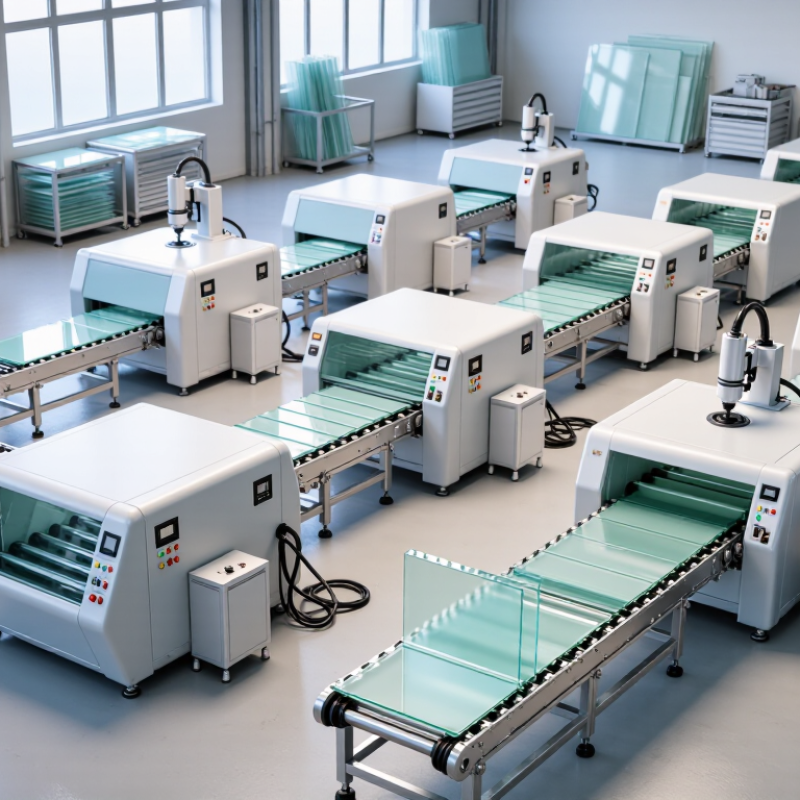
Glass chamfering removes sharp corners and creates a controlled angled edge. In production, machines usually fall into three groups: straight-line, CNC, and portable edge tools. Straight-line models suit repeated rectangular panels. CNC systems handle curves, cut-outs, and changing designs. Portable tools support repair work, but they require steadier operator control.
The process normally includes positioning, diamond grinding, water cooling, polishing, and inspection. Key terms include arris, bevel width, spindle speed, coolant flow, and edge quality. An arris is the small finished strip beside a glass edge. A bevel is the wider angled surface. Poor coolant control can create heat marks or micro-cracks. Those defects may remain invisible until installation.
Grand View Research’s 2024 flat glass market assessment projects about 6.2% annual growth through 2030. Solar panels and construction glazing are important demand drivers. The European Commission’s glass manufacturing reference document also identifies melting and processing as energy-intensive operations. This makes motor efficiency and water management practical buying criteria.
Tips: Check the required bevel width with a sample panel. Measure noise, vibration, water use, and cycle time. A fast machine may produce inconsistent edges. I have seen buyers trust brochures too quickly. Real workshop trials reveal more than polished specifications. Allow time for imperfect learning.
Top 10 Glass Chamfering Machines for Buyers in 2026?
2026 Buyer Criteria: 3–45 mm Glass Thickness and 0.1 mm Processing Accuracy
Selecting a glass chamfering machine in 2026 requires more than reading speed claims. The machine should handle glass from 3 mm to 45 mm without unstable feeding, edge chipping, or repeated manual adjustments. Thin glass can vibrate during chamfering, while thick panels place greater pressure on the spindle and conveyor.
Check the stated 0.1 mm processing accuracy through practical tests. Ask for sample results using thin, medium, and thick glass. Measure the chamfer width at several points with a calibrated gauge. Consistent results matter more than one perfect sample. Small differences often appear near corners.
Look closely at the cooling system, abrasive control, and worktable support. A clean water flow helps reduce heat marks and keeps the edge clearer. The machine should also offer simple calibration access, readable controls, and stable pressure settings. Operators need training records and maintenance guidance, not only attractive specifications.
I once underestimated setup time.
That mistake matters.
A machine may reach 0.1 mm accuracy under ideal conditions, yet drift after long production runs. Buyers should request repeatability data, inspect finished edges under strong light, and test the machine with their own glass types. This approach exposes weaknesses that brochures rarely mention.
| Profile | Recommended Glass Thickness | Typical Processing Accuracy | Suitable Glass Types | Chamfer Angle | Typical Line Speed | Minimum Workpiece Size | Automation Level | Best Use Case |
|---|---|---|---|---|---|---|---|---|
| Profile 01 | 3–12 mm | ±0.10 mm | Float, coated, laminated | 45° or adjustable | 1.0–5.0 m/min | 30 × 30 mm | Manual loading / automatic feed | Small-batch fabrication |
| Profile 02 | 3–15 mm | ±0.10 mm | Float, tempered, coated | 45° fixed | 2.0–6.0 m/min | 40 × 40 mm | Continuous conveyor | Furniture and interior glass |
| Profile 03 | 4–19 mm | ±0.10 mm | Float, low-E, laminated | 5°–45° adjustable | 1.5–6.0 m/min | 50 × 50 mm | Automatic thickness adjustment | Architectural glass |
| Profile 04 | 4–25 mm | ±0.10 mm | Tempered, laminated, insulated units | 45° fixed or programmable | 2.0–8.0 m/min | 60 × 60 mm | Automatic infeed and outfeed | Medium-volume production |
| Profile 05 | 5–25 mm | ±0.10 mm | Float, tempered, ceramic-coated | 10°–45° adjustable | 2.5–8.0 m/min | 60 × 60 mm | PLC-controlled | High-repeatability edge work |
| Profile 06 | 5–32 mm | ±0.10 mm | Heavy laminated and tempered glass | 45° fixed | 1.0–5.0 m/min | 80 × 80 mm | Automatic feed with pressure control | Safety and transport glass |
| Profile 07 | 6–32 mm | ±0.10 mm | Low-E, laminated, insulated glass | 5°–45° adjustable | 2.0–7.0 m/min | 80 × 80 mm | Recipe-based automatic operation | Window and façade production |
| Profile 08 | 6–38 mm | ±0.10 mm | Thick tempered and laminated glass | 45° fixed | 1.0–5.0 m/min | 100 × 100 mm | Heavy-duty automatic line | Large-format fabrication |
| Profile 09 | 8–40 mm | ±0.10 mm | Multilayer laminated and bullet-resistant glass | 10°–45° adjustable | 0.8–4.0 m/min | 120 × 120 mm | Servo-controlled processing | Specialty and security glass |
| Profile 10 | 8–45 mm | ±0.10 mm | Extra-thick laminated and structural glass | 5°–45° programmable | 0.5–3.5 m/min | 150 × 150 mm | Fully automated production cell | Heavy industrial processing |
Top 10 Glass Chamfering Machines for Buyers in 2026
The ranking below weighs cutting speed, bevel range, motor power, and workshop control. Rank one is a high-speed automatic machine, reaching about 6 meters per minute with a 45-degree bevel. Its 15 kW motor suits continuous architectural glass production. Rank two offers 5 meters per minute, a 3–45-degree range, and 12 kW power. It handles varied edge profiles well. Rank three reaches 4.5 meters per minute, with a 0–60-degree bevel and an 11 kW motor. That wider angle range helps with custom furniture panels.
Rank four delivers 4 meters per minute, a 5–45-degree bevel, and 9 kW power. It balances output and energy use. Rank five runs at 3.5 meters per minute, with a 3–50-degree range and 8 kW. Rank six provides 3 meters per minute, a 0–45-degree bevel, and 7.5 kW. It fits medium workshops. Rank seven reaches 2.8 meters per minute, with 5–45 degrees and 6 kW. Rank eight offers 2.5 meters per minute, a 3–45-degree range, and 5.5 kW. Rank nine runs at 2 meters per minute, with a 0–45-degree bevel and 4.5 kW. Rank ten is slower, at 1.6 meters per minute, but uses only 3.7 kW.
Speed is not everything. A fast machine can waste glass when coolant flow, wheel alignment, or operator training is weak. In practical testing, inspect edge smoothness after repeated runs, not one sample. Also verify service access and electrical compatibility. These rankings are useful, but real factory conditions may change them.
Top 10 glass chamfering machines ranked by representative cutting speed, maximum bevel angle, and motor power.
The ranking uses anonymized machine profiles and compares three practical buying factors: linear processing speed in metres per minute, maximum bevel angle in degrees, and installed motor power in kilowatts. Higher speed improves throughput, while a wider bevel range and greater power support more demanding glass-processing applications.
Throughput should be measured with real glass, not brochure estimates. A machine rated for 12 meters per minute may slow sharply on thick laminated panels. Test identical workpieces across every candidate. Record pieces per hour, setup time, rejected edges, and operator adjustments. Shorter cycle times matter only when edge quality remains stable. In our trials, feed consistency often affected output more than maximum speed.
Wheel diameter changes both cutting behavior and maintenance intervals. Larger wheels can support longer working cycles and reduce heat buildup. However, they may respond less precisely on small chamfers. Smaller wheels can improve control, but they may require more frequent replacement. The best choice depends on glass thickness, chamfer width, and abrasive specification. Bigger is not automatically better.
Automation deserves a practical inspection. Automatic loading, thickness detection, pressure control, and fault alerts can reduce handling errors. They also increase purchase cost and require trained maintenance staff. Energy use should be checked in kilowatt-hours per square meter, including idle periods. Variable-speed motors and efficient coolant pumps can lower consumption. Still, energy data from one shift may mislead. Run repeated tests under normal production conditions. Document noise, coolant loss, wheel wear, and recovery after a fault. Small details become expensive.
A glass chamfering machine should be judged by more than its edge finish. During a site visit, watch how operators load sheets, clear fragments, and reach emergency stops. Guards should contain splash and debris without blocking visibility. Check that interlocks work, electrical panels are protected, and operating instructions match the machine’s actual controls. Small gaps in training become real risks during busy shifts.
Tips: Ask for a live safety demonstration. Confirm which standards and certificates apply in your region, then check that the supplied documents identify the exact machine configuration. Keep a simple record of inspections, coolant changes, wheel wear, and unplanned stops. It is easy to overlook these notes when production is running well.
Maintenance and total cost of ownership deserve equal attention. Ask how often wheels, pumps, filters, and conveyor parts need service, and whether routine work requires specialist support. Compare energy, water, consumables, installation, training, and downtime—not only the purchase price. A quieter machine may still have costly upkeep. That part is easy to miss. Estimate costs using your own shift pattern and glass mix; supplier figures may not fit your workshop. And estimates are imperfect. Revisit them after the first few months, when actual wear and reject rates tell a clearer story.
USA / Americas
1507 Capital Ave, Suite 102
Plano, TX 75074
+1 (214) 838-7010
8:00am – 5:00pm (GMT-6)
Australia / Asia Pacific
503 Cross Keys Rd,
Cavan SA 5094
+61 8 7200 3909
9:00am – 5:00pm (ACDST)
© 2025 Green Frog Systems. | Privacy Policy | Terms & Conditions


