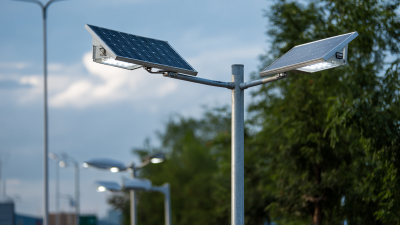


Temporary & Portable Solar Lighting

China Top 10 LED Solar Lights Outdoor Suppliers?

Choosing reliable Led Solar Lights Outdoor suppliers requires more than comparing prices, product photos, or advertised lumen numbers. This market includes factories, trading companies, and specialized lighting manufacturers with very different capabilities. A supplier may offer an attractive aluminum housing, yet use a weak battery that dims after several cloudy nights. Another may provide impressive specifications, but lack stable quality control between production batches.

Energy expert Dr. Steven Chu once said, “The sun provides more energy to the Earth in one hour than the entire world consumes in a year.” That potential explains the growing demand for solar lighting, but outdoor performance still depends on practical engineering. Panel efficiency, battery capacity, charging time, LED optics, waterproof sealing, and thermal management all matter. So does the supplier’s experience with local weather conditions.

This guide examines China’s top 10 Led Solar Lights Outdoor suppliers through a buyer-focused lens. It considers manufacturing strength, product customization, certifications, warranty support, export experience, and after-sales responsiveness. Sample testing remains essential. Website claims are not enough. A lamp should be tested through rain, dust, low temperatures, and several charging cycles before large-scale purchasing.

There is no flawless supplier. Even strong manufacturers can experience delays, component shortages, or inconsistent batches. That uncomfortable point deserves attention. The best choice is not always the cheapest quotation. It is the supplier that explains limitations clearly, provides traceable quality evidence, and supports the product after shipment. This comparison aims to make that decision more practical, transparent, and dependable.
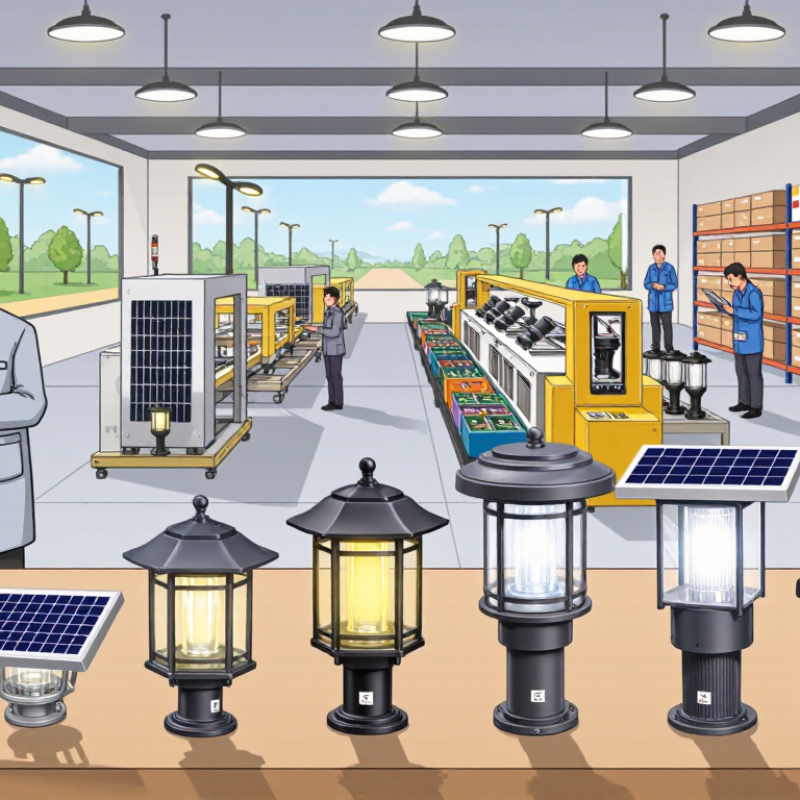
China Top 10 LED Solar Lights Outdoor Suppliers?

What Defines a Leading Outdoor LED Solar Light Supplier in China

A leading outdoor LED solar light supplier in China does more than assemble panels, batteries, and housings. It proves performance under real outdoor conditions. The IEA PVPS Trends 2024 report recorded about 456 GW of new global solar capacity in 2023. This growth raises expectations for reliable solar components, even in small lighting systems.

A capable supplier should show measured data for luminous output, charging time, battery cycle life, and operating temperature. Ask for test reports, not attractive catalog claims. LED maintenance testing, such as IES LM-80 methods, can support claims about long-term light performance. Housing protection should be verified through appropriate IP testing. Corrosion testing also matters near coastal roads. Small details often fail first. A strong factory controls soldering, sealing, wiring, and battery protection through documented inspections. It should also understand IEC 60598 requirements for luminaires and provide traceable production records. The International Energy Agency’s Energy Efficiency 2023 report emphasizes efficient lighting as a practical way to reduce electricity demand, but efficiency without durability creates waste.

Tips: Request a sample batch, not one perfect unit. Test it through cloudy days, dust, rain, and repeated night cycles. Compare delivered lumens, not only LED wattage. Check whether the supplier explains weak results honestly. That conversation can reveal more than a polished presentation. A useful supplier also offers replaceable parts, clear warranty terms, and technical support after installation. Performance may vary by region, and many quotations overlook winter sunlight or tree shading. Assess those limits before selecting a long-term manufacturing partner.

Key Criteria for Ranking China’s Top 10 Suppliers

Ranking China’s top 10 outdoor LED solar light suppliers requires more than comparing online catalogs. A credible review should examine factory experience, production capacity, and quality control records. Supplier history matters, but it should not replace current evidence. Recent inspection reports, sample results, and customer references provide stronger support.

Performance testing should cover brightness, battery capacity, charging time, and lighting duration. A reliable sample should survive rain, dust, and repeated outdoor temperature changes. IP ratings, material thickness, and solar panel efficiency also deserve close attention. Ask for independent test reports where possible. Marketing figures can look impressive. Measurements may tell a different story.

Commercial reliability affects the ranking as much as technical quality. Review minimum order quantities, lead times, packaging strength, spare parts, and warranty handling. Clear communication during sampling is a useful practical test. Suppliers should explain production changes and disclose critical component sources. Factory audits can verify equipment, worker training, and traceability. However, audits are only snapshots. A spreadsheet cannot capture every factory reality. Shipment consistency still needs monitoring. My ranking would combine weighted scores, verified samples, and after-sales records, while allowing room for uncertainty. Cost should influence the result, but the cheapest quotation may hide weaker batteries or shorter service life.

Profiles of China’s Top 10 Outdoor LED Solar Light Suppliers

China’s Top 10 Outdoor LED Solar Light Suppliers

This profile-based guide examines ten leading Chinese suppliers of outdoor LED solar lighting. Each profile should cover factory capability, product design, quality control, and export experience. Reliable suppliers usually provide photometric data, battery specifications, and clear warranty terms. They also explain how products perform during cloudy weather, winter nights, and heavy rain. Details matter.

Several suppliers focus on pathway lights, while others produce floodlights, streetlights, garden lamps, and security fixtures. Strong manufacturers use tested lithium batteries, efficient solar panels, and sealed housings. Look for suitable IP ratings, realistic brightness claims, and replaceable components. Factory audits and sample testing can reveal more than a polished catalog. I would not trust impressive images alone. They often hide weak wiring or inconsistent charging performance.

Tips: Request samples before placing a large order. Test lighting for several nights. Check charging time, motion sensors, mounting strength, and battery behavior. Ask for independent test reports and production photos. Confirm packaging details before shipment. A supplier may offer a low price, yet poor battery life can raise long-term costs. Also, compare communication speed and technical answers. Small delays are acceptable. Vague answers are not. Conditions vary by region, so a product working well in southern China may need different settings in colder climates.

China Top 10 LED Solar Lights Outdoor Suppliers

Supplier evaluation framework for comparing outdoor LED solar light manufacturers. The percentages represent editorial weighting by selection importance, not company-specific performance data.

Product quality and outdoor durability receive the highest weight because lighting performance, weather resistance, and long-term reliability are central to solar lighting procurement.

Product Types, Technologies, and Customization Options

China’s top 10 LED solar light suppliers usually cover several outdoor product types. All-in-one street lights combine the panel, battery, controller, and LED module in one housing. Split solar lights separate the panel from the lamp for flexible installation. Floodlights suit yards, warehouses, and construction entrances. Garden, wall, and pathway models serve smaller spaces.

Technology choices affect real performance. Monocrystalline panels offer strong output in limited roof or pole space. LiFePO4 batteries provide stable cycling and safer thermal behavior. PIR sensors can reduce brightness when nobody is nearby. Radar sensing may respond better through light rain or thin obstacles. Look for MPPT charging, IP66 protection, and impact-resistant housings. Claims still need testing. A bright sample can disappoint after several cloudy days.

Customization is often more valuable than a larger catalog. Suppliers may adjust LED power, beam angle, color temperature, pole height, battery capacity, and mounting brackets. They can also develop remote monitoring, timed dimming, or regional control settings. Ask for photometric files, battery test data, salt-spray results, and sample units before production. Field trials matter. In my experience, installation height and tree shadows cause more failures than expected. A supplier may pass laboratory checks yet miss the actual road layout. That uncomfortable gap deserves careful review.

China Top 10 LED Solar Lights Outdoor Suppliers? - Product Types, Technologies, and Customization Options
Rank Anonymous Supplier Profile Main Outdoor LED Solar Light Types Typical Technologies and Specifications Solar Panel and Battery Options Common Customization Options Typical Compliance Documentation Suitable Applications
1 Profile A
High-volume OEM
All-in-one solar street lights, integrated road lights, pathway lights High-efficiency LED modules, passive aluminum heat dissipation, dusk-to-dawn control, programmable dimming, motion-sensor compatibility Monocrystalline silicon panels; lithium iron phosphate batteries commonly offered in 12.8 V configurations; typical autonomy of 2–3 nights Housing color, pole-mount bracket, LED power, beam angle, battery capacity, controller settings, logo and carton packaging CE, RoHS, EMC, LVD, IP65/IP66 test reports; IEC-based component documentation may be available Municipal roads, residential streets, industrial parks, logistics yards
2 Profile B
Commercial lighting
Solar wall lights, security lights, floodlights, courtyard fixtures PIR motion sensing, multi-level brightness control, remote-control operation, LED efficacy commonly around 120–180 lm/W Monocrystalline panels with lithium-ion or LiFePO₄ storage; charging protection and over-discharge protection included in standard designs Sensor range, lighting modes, mounting plate, color temperature, enclosure finish, remote-control layout, retail packaging CE, RoHS, FCC for applicable wireless or electronic configurations, IP65 water-resistance testing Homes, hotels, parking areas, gardens, building entrances
3 Profile C
Smart-control focused
Smart solar street lights, connected area lights, remote-monitoring systems LoRa, 4G, NB-IoT or Bluetooth gateway options; remote status monitoring; adaptive dimming; fault alerts and scheduling High-efficiency monocrystalline panels; LiFePO₄ battery packs with battery-management systems and temperature protection Communication protocol, cloud dashboard, API integration, sensor package, dimming schedule, enclosure dimensions, control cabinet design CE, RoHS, EMC, LVD, radio-equipment documentation where applicable, IP66 testing Smart cities, campuses, highways, ports, large commercial developments
4 Profile D
Decorative lighting
Solar garden lights, bollard lights, lanterns, decorative pathway fixtures Low-voltage LED boards, automatic light sensors, warm-white decorative illumination, concealed battery compartments Small monocrystalline or polycrystalline panels; rechargeable Ni-MH or lithium battery options depending on product size Fixture shape, housing material, surface coating, light color, decorative pattern, stake length, gift-box and retail-packaging design CE, RoHS, IP44–IP65 testing depending on enclosure design; packaging and battery transport documents may apply Gardens, resorts, restaurants, landscape projects, residential pathways
5 Profile E
Heavy-duty outdoor
Solar floodlights, high-mast lights, large-area security lighting High-power LED arrays, optical lenses, reinforced aluminum housings, thermal management, programmable operating profiles Large monocrystalline panels; LiFePO₄ battery cabinets with replaceable modules and extended autonomy designs LED wattage, flood beam distribution, bracket strength, battery enclosure, solar-panel size, operating hours, wind-load requirements CE, RoHS, EMC, LVD, IP66/IP67 test reports, mechanical-load documentation where required Construction sites, warehouses, sports grounds, mining areas, security perimeters
6 Profile F
Budget OEM
Entry-level solar wall lights, compact floodlights, basic street lights Integrated LED and controller boards, automatic night activation, standard PIR sensor options, simplified dimming programs Polycrystalline or monocrystalline panels; lithium-ion battery packs or compact LiFePO₄ batteries; usually designed for 1–2 nights of autonomy LED output, plastic or aluminum housing, sensor sensitivity, package artwork, cable length, mounting accessories and color temperature CE, RoHS and basic IP testing commonly available; documentation varies by configuration Residential projects, small retail sites, rural pathways, promotional programs
7 Profile G
Project engineering
Split-type solar street lights, remote-panel systems, customized roadway fixtures Separate solar panel and luminaire architecture, MPPT charge control, replaceable battery compartment, adjustable lighting profiles Monocrystalline panels sized according to solar-resource calculations; LiFePO₄ or lithium-ion batteries selected for climate and autonomy requirements System sizing, pole height, panel tilt, cable length, battery cabinet, controller brand specification, wind-resistance and foundation design CE, RoHS, EMC, LVD, IP65/IP66 reports, project-specific structural and electrical documentation Rural roads, remote areas, villages, highways and regions with limited grid access
8 Profile H
Export packaging
Solar street lights, wall lights, garden lights and mixed outdoor lighting collections Modular product platforms, tool-free maintenance features, replaceable LED or battery compartments, automatic operating modes Monocrystalline panels; lithium battery options with protection circuits; battery capacity and panel rating configurable by market Private-label packaging, multilingual manuals, barcode labels, plug and cable standards, product color, accessory bundles and carton dimensions CE, RoHS, FCC or UKCA documentation depending on destination market; UN38.3 and MSDS commonly required for lithium batteries Distributors, e-commerce sellers, hardware retailers, international project tenders
9 Profile I
Cold-climate capable
Solar roadway lights, perimeter lights, security floodlights for seasonal climates Low-temperature battery management, sealed connectors, anti-corrosion coatings, adaptive dimming and extended autonomy programming Monocrystalline panels; LiFePO₄ packs with low-temperature charging protection, heating options or insulated battery compartments Battery heating system, corrosion-resistant coating, snow-load considerations, panel angle, cable protection, temperature-control parameters CE, RoHS, EMC, LVD, IP66 testing; low-temperature and salt-spray test reports may be available by project Northern climates, coastal regions, mountain roads, exposed industrial areas
10 Profile J
Landscape and hospitality
Solar bollards, post-top lanterns, decorative wall fixtures, resort and landscape lighting Architectural LED optics, warm-white light sources, glare-control accessories, automatic timers and low-light operation modes Compact monocrystalline panels; lithium-ion or LiFePO₄ batteries selected according to fixture size and required operating time Architectural dimensions, custom finishes, color temperature, optical diffuser, mounting base, landscape-matching design and branded packaging CE, RoHS, IP44–IP66 testing according to product construction; material and coating test reports may be supplied Hotels, resorts, parks, restaurants, villas, pedestrian and landscape projects

How to Choose the Right Chinese Solar Light Supplier

Choosing a Chinese solar light supplier requires more than comparing catalog prices. Ask for the factory address, business license, production photos, and recent quality records. A polished website proves little. Request samples from the same production line planned for your order. Test them outdoors for several nights. Check brightness after rain, charging time, motion response, and battery performance before sunrise. Small details matter.

Ask which LED package, battery chemistry, panel rating, controller, and housing material the supplier uses. Suppliers should provide measurable specifications, not vague claims like “super bright.” Confirm the IP rating through an independent test report when possible. Review certificates required in your destination market. A reliable supplier explains tolerances and replacement procedures clearly. Communication is evidence. Notice whether sales, engineering, and quality teams give consistent answers. If technical questions create discomfort, pause.

Compare warranty terms, spare parts, packaging, minimum order quantities, and lead times. Calculate total cost, including freight, testing, defects, and after-sales labor. A low unit price can become expensive after installation. Use written sample approval and inspection plans. Third-party inspection is useful for larger orders. In field evaluations, I have found that rushed samples sometimes hide weak seals or unstable batteries. That lesson is easy to ignore. No checklist is perfect. Leave room for seasonal weather tests and a small pilot order. The supplier should welcome verification, even when it slows the first shipment.

(214) 838-7010